Travelling is all about discovering new places, trying new things and making unforgettable memories. But while most travel experiences are wonderful, tourists can sometimes become easy targets for people looking to make quick money. The good news is that you do not need to be scared or overly suspicious during your holiday. You simply need to know what to look for. Most travel scams follow a familiar pattern. Someone creates confusion, rushes you into making a decision or offers something that sounds too good to be true.
From fake taxis and overpriced tours to card scams and fake booking websites, here are 10 common tricks every traveller should know before their next holiday.
1. The Fake Taxi or Overcharging Taxi Scam

One of the most common travel scams happens even before your holiday properly begins.
You arrive at an airport or railway station and someone approaches you saying, “Taxi?” They may claim that the official taxi service is unavailable or offer you a special fixed price. Once you reach your destination, you may be asked to pay much more than expected.
Another version involves a driver saying that the meter is not working and then charging an unusually high amount.
How to stay safe:
- Use official airport taxi counters or trusted ride-booking apps.
- Check the approximate fare before travelling.
- Confirm whether the meter will be used before entering the taxi.
- Keep the vehicle and driver details handy.
- Avoid drivers who approach you aggressively inside an airport or station.
Official travel advice also recommends using licensed taxis and confirming the fare before starting your journey.
2. The Pickpocketing Scam

Busy tourist attractions, public transport, markets and crowded streets can become easy places for pickpockets to target visitors.
Sometimes, one person creates a distraction while another takes your wallet or phone. Someone may bump into you, spill something on your clothes or create a sudden crowd around you.
The trick is simple: they want you to stop paying attention to your belongings.
How to stay safe:
- Keep your wallet and phone in secure pockets.
- Use a crossbody bag and keep it in front of you in crowded areas.
- Avoid keeping valuables in the back pocket of your trousers.
- Do not display large amounts of cash.
- Be extra careful when someone suddenly distracts you.
You do not have to avoid crowds. Just stay aware of what is happening around you.
3. The Fake Ticket Scam

Imagine reaching a famous attraction and finding someone offering tickets at a “special price”. It may sound like a great deal, but the ticket could be fake, invalid or much more expensive than the official price.
This can happen with attraction tickets, public transport tickets, tours and even event passes.
How to stay safe:
- Buy tickets from the official website, ticket counter or authorised seller.
- Check the name and address of the website before paying.
- Be careful with tickets offered through random social media accounts.
- Never feel pressured to buy immediately.
- Compare the price with the official source first.
A few minutes of checking can save you both money and a lot of trouble.
4. The Fake Hotel or Holiday Booking Scam

Online booking has made travel easier, but it has also created new ways for scammers to target travellers.
Fake websites, social media pages and messaging accounts can look very professional. They may use attractive pictures, fake reviews and huge discounts to convince you to make a payment. After receiving the money, the person may stop responding.
India’s cybercrime authorities have specifically warned about fake websites, social media pages and advertisements offering fake hotel, taxi, holiday and pilgrimage bookings.
How to stay safe:
- Book through trusted travel companies or verified booking platforms.
- Check the website address carefully.
- Look for independent reviews.
- Be cautious about offers that are far cheaper than normal prices.
- Avoid making payments to unknown personal bank accounts.
- Ask for proper booking confirmation and receipts.
Remember, a professional-looking website does not always mean it is genuine.
5. The “Your Hotel Is Closed” Scam
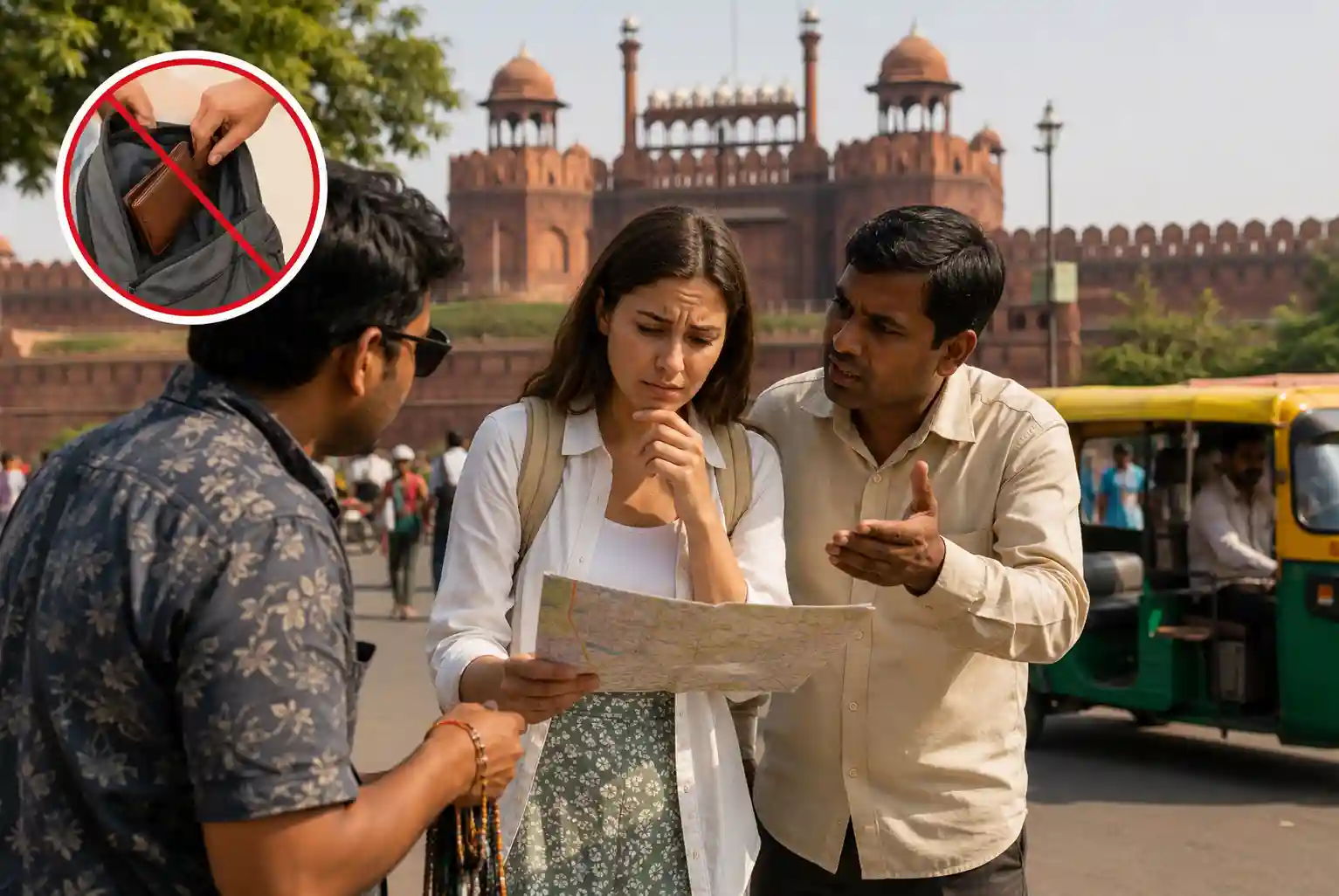
This is an old trick that still catches travellers off guard.
A stranger may approach you near an airport, railway station or tourist area and tell you that your hotel is closed, fully booked or located in an unsafe area. They then offer to take you to another hotel or travel office.
The real goal may be to take you somewhere where they can earn a commission or convince you to pay for an unnecessary service.
How to stay safe:
- Do not panic if someone gives you unexpected information about your hotel.
- Call your hotel directly using the contact details from your booking.
- Check the hotel location on your maps app.
- Do not change your plans just because a stranger tells you to.
- Ask your hotel staff for help if you have any genuine problem.
A simple phone call can quickly tell you whether the information is real.
6. The “Special Tour” Scam

You may meet a friendly local who starts a conversation and tells you about a fantastic tour, shop or attraction that “only locals know about”.
They may offer you a very cheap sightseeing tour. Later, you could be taken to expensive shops where the driver or guide receives a commission.
Sometimes the tour itself is real, but the prices are much higher than normal.
How to stay safe:
- Research tours before your trip.
- Check reviews from different websites.
- Ask for the complete price before agreeing.
- Find out what is included and what is not.
- Do not allow anyone to pressure you into shopping.
A friendly conversation is fine. Just do not let someone else make your travel decisions for you.
7. The ATM and Card Skimming Scam
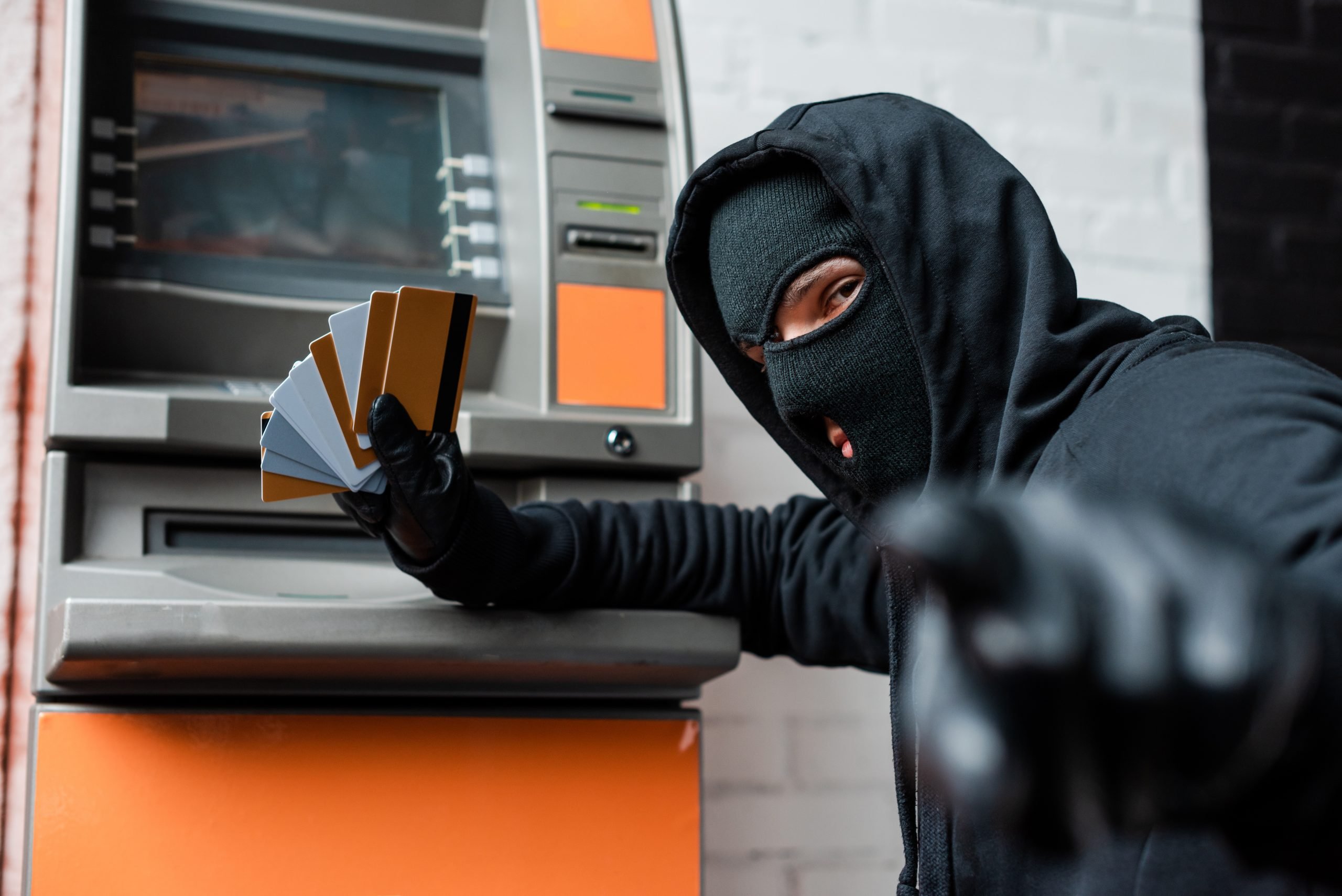
ATMs are another area where travellers should stay alert.
A stranger may offer to “help” you when you are having trouble using an ATM. In some cases, scammers may try to see your PIN or use a card-skimming device to steal card information.
Another risk is using an ATM that has been tampered with.
How to stay safe:
- Use ATMs inside banks or trusted locations.
- Cover the keypad while entering your PIN.
- Never share your PIN or OTP.
- Do not accept help from strangers at an ATM.
- Check your bank statements regularly during your trip.
- Inform your bank immediately if you notice anything unusual.
If an ATM looks suspicious or damaged, simply use another one.
8. The Restaurant or Bar Overcharging Scam
:max_bytes(150000):strip_icc()/Paris-Restaurant-Scam-Targets-American-Tourists-FT-BLOG0825-d92f3af0db9442de90f98b2eeb51e0da.jpg)
You sit down for a relaxing meal and later receive a bill that is much higher than expected.
Sometimes extra items are added to the bill. In other cases, prices may be unclear or a tourist may be charged for something they thought was complimentary.
This is especially easy to fall for when you are unfamiliar with the local currency.
How to stay safe:
- Check the menu prices before ordering.
- Ask about additional charges.
- Check the bill carefully.
- Learn the local currency before your trip.
- Avoid restaurants that refuse to show prices.
- If something looks wrong, politely ask for an explanation.
Do not feel embarrassed about checking the bill. It is your money, so you have every right to understand what you are paying for.
9. The Currency Exchange Scam
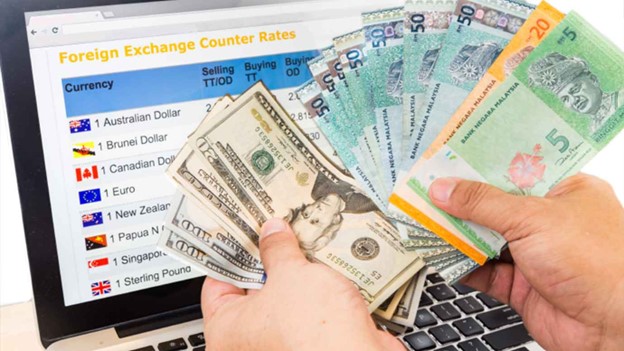
When travelling internationally, you may need to exchange money. This is where some travellers can lose money without even realising it.
A person may offer an attractive exchange rate but give you less cash than expected. Another trick is displaying one rate and then using a different rate during the actual exchange.
How to stay safe:
- Exchange money through authorised and trusted providers.
- Check the current exchange rate before exchanging cash.
- Count your money before leaving the counter.
- Ask about service charges.
- Avoid exchanging money with strangers on the street.
- Keep your receipts.
Never rush through a currency transaction simply because you are tired or in a hurry.
10. The Fake QR Code or Payment Scam
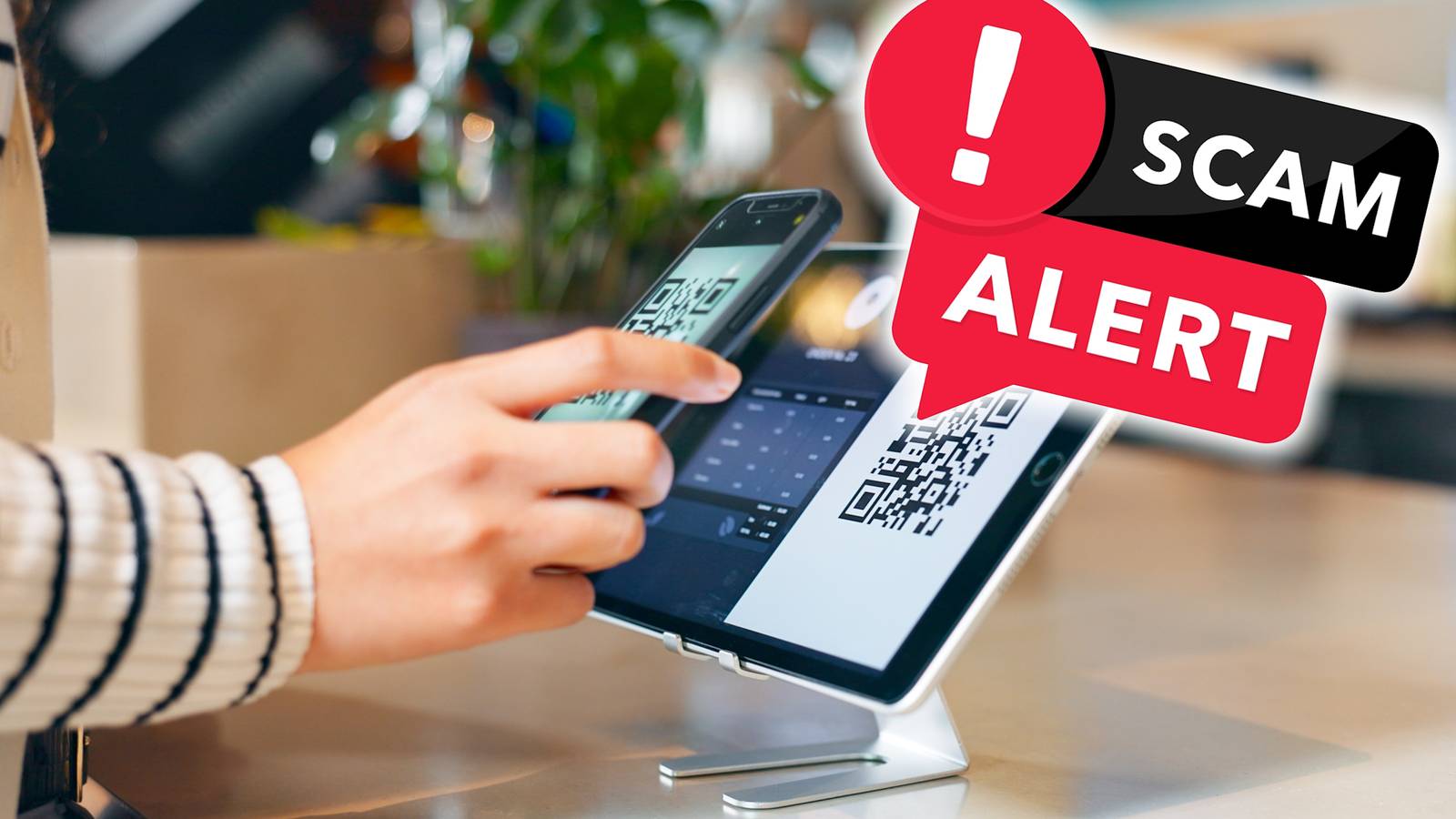
Technology has made travel payments easier, but scammers have also found new ways to misuse it.
A fake QR code can redirect you to a fraudulent payment page or website. You may think you are paying a restaurant, attraction or service, while your money is actually going somewhere else.
How to stay safe:
- Scan QR codes only from trusted sources.
- Check the name of the person or business before paying.
- Do not enter banking details on suspicious websites.
- Never share your OTP or UPI PIN.
- Be careful with QR codes sent through unknown WhatsApp or social media accounts.
- Keep payment notifications switched on.
If anything feels unusual during a digital payment, stop and check before proceeding.
How to Avoid Travel Scams Without Spoiling Your Holiday

Knowing about travel scams does not mean you should spend your entire holiday worrying about being cheated. The idea is simply to stay prepared.
Here are a few simple habits that can make a big difference:
1. Do Your Research Before You Go
Spend some time learning about your destination. Know the normal taxi fares, local currency, popular attractions and official ticket websites.
2. Keep Important Numbers Saved
Save your hotel, airline, travel company, bank and emergency contact details before leaving home.
3. Do Not Make Quick Decisions
Scammers often create urgency. “Last ticket”, “special price” or “your hotel is closed” are common pressure tactics. Take a moment to verify the information.
4. Keep Your Money in Different Places
Do not carry all your cash and cards in one wallet. Keep some money separately as a backup.
5. Protect Your Personal Information
Never share your PIN, OTP, banking password or passport details with strangers.
6. Trust Your Instincts
If something feels strange, you do not have to be polite and continue. Simply say no and walk away.